

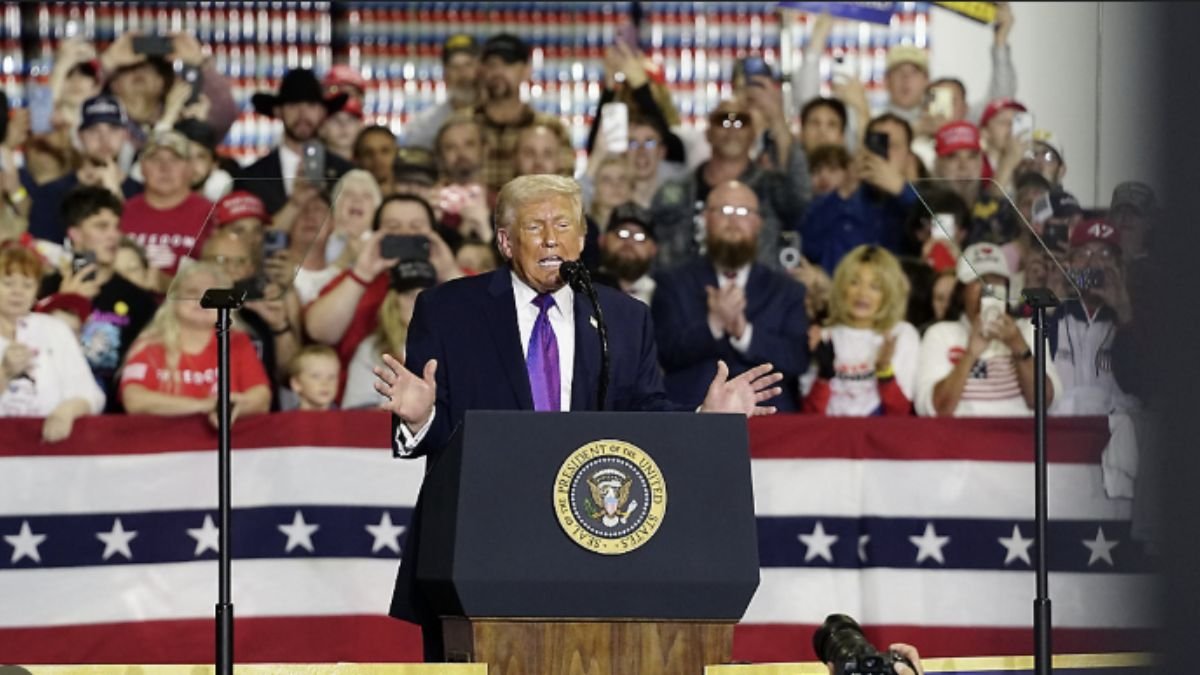
Donald Trump just flew into northern Kentucky and told a crowd that Congressman Thomas Massie is a “Disaster for the Republican Party.”
That raises a bigger question for voters in Kentucky’s 4th district.
Can Donald Trump actually bully out one of the most independent members of Congress?
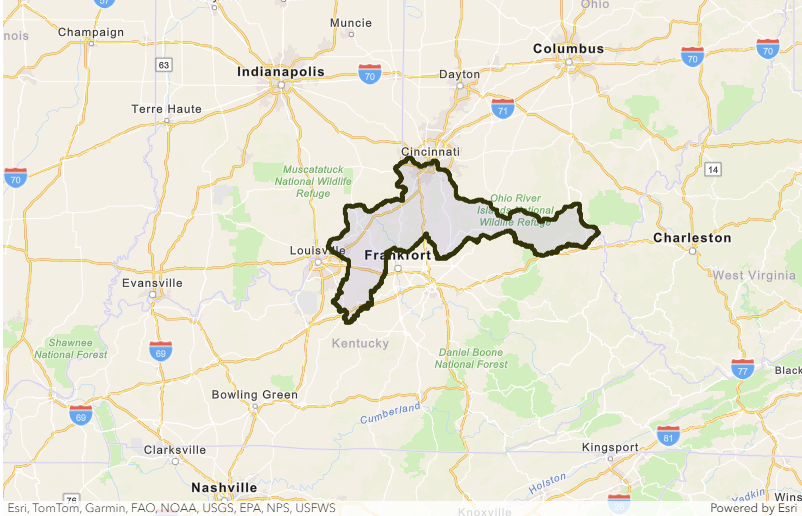
Kentucky’s 4th district is the part of the state that commutes to Ohio for work, drinks Kentucky bourbon at night, and somehow manages to be both suburban and rural at the same time.
It belongs to Congressman Thomas Massie. In a district that prides itself on thinking for itself, Massie has managed the rare political trick of surviving by doing exactly that.
When Trump and Massie First Collided (2020 Cares Act)
Their first major dispute came in the early days of the Covid pandemic.
In March 2020, Congress rushed to pass a $2 trillion bill called The CARES Act, one of the largest spending bills in American history. Majority of Congress wanted to pass this by voice vote so members would not have to return to Washington during the pandemic.
Massie didn’t like that idea.
He demanded an in-person vote so that every member of Congress would go on record supporting one of the largest spending bills in American history. This bill deserved accountability.
Trump reacted furiously.
On social media, Trump blasted Massie on Twitter, calling him a “Third Rate Grandstander“. Trump said he was delaying urgent pandemic relief. He even urged his loyalists to throw Massie out of the party.
Massie forced the vote, it ultimately passed overwhelmingly.
The Spending Fights Continue
The tensions did not end with the CARES Act.
Just two short months later, in May 2020, Massie opposed additional Covid spending bills. Massie publicly warned that repeated stimulus packages would explode the federal deficit, saddle the economy with long-term debt and increase inflation risk. The Trump criticism ramped back up.
Later that year, in December 2020, Congress passed another massive spending package combining $900 billion in pandemic relief with a $1.4 trillion omnibus spending bill.
Massie once again opposed the spending package that Trump and Republican leadership rushed through Congress. The legislation ultimately passed, but Massie’s resistance solidified his reputation as one of the most fiscally conservative members of Congress.
Breaking with the Party on National Security
Massie’s clashes with Republican leadership were not limited to spending.
In September 2023, he opposed several short-term spending bills to prevent a government shutdown. Massie argued that Republicans should use this opportunity to force serious federal spending cuts instead of passing temporary funding measures.
Then in February 2024, Massie opposed a large foreign package that included funding for Ukraine and Israel. He argued Congress should be focused on America first, instead of sending money overseas.
A few months later, in June 2024, Congress moved to pass the reauthorization of section 702 of the Foreign Intelligence Surveillance Act (FISA). Massie opposed the renewal because it did not do enough to protect Americans’ civil liberties.
He warned that it would allow warrantless surveillance of Americans, and wanted to reform it.
Once again, Massie found himself at odds with his own party, which believed Republican messaging on national security should remain unified.
Independence Over Party Loyalty
Thomas Massie is a rare figure in Washington. He votes based on principle rather than party pressure.
That independence is exactly what put him in this battle with Republican leadership. Whether it be federal spending, Americans’ civil rights, or foreign aid overseas, Massie has shown a willingness to speak up for the constitution and liberty itself against his own party.
If Republicans begin punishing that independence, it raises a deeper question about whether party loyalty now matters more than principle.
Pushing for Transparency on the Epstein Files
Massie’s independence has also shown up in another controversial issue.
After Epstein’s federal arrest in July 2019, Massie began calling for transparency surrounding the investigation and all of the powerful elites connected to Jeffrey Epstein.
Massie argued that Americans need to know whether wealthy or politically connected individuals had been shielded from scrutiny.
Five years later, in July 2024, Massie and Democrat Ro Khanna introduced the Epstein Transparency Act.
After a discharge petition barely gathered enough signatures, the bill passed the Senate unanimously and the House by a vote of 427–1. (Rep. Clay Higgins of Louisiana cast the lone vote against it.)
The struggle to force the Department of Justice to comply is still ongoing.
The Real Question for Kentucky Voters
Donald Trump clearly believes Thomas Massie is a problem for the Republican Party.
But voters in Kentucky’s 4th district may see something different. They may see a congressman who votes the same way regardless of who is in power.
And In Washington today, that kind of independence has become extremely rare.
The real question now is whether Kentucky voters still value it.
0 Comments